Digital PR examples: 13 powerful campaigns and strategies that work

Building brand authority can be just as important as backlinks for SEO. Here are 13 effective ways to use digital PR to gain visibility, rankings, and traffic.
Key takeaways:
- Survey-based campaigns can spark emotional reactions and high engagement that lead to widespread coverage.
- Seasonal campaigns gain visibility by aligning content with holidays or events when audience interest peaks.
- Newsjacking leverages trending topics to quickly capture press attention and earn backlinks.
- Viral content campaigns often succeed when the content is highly shareable and emotionally engaging.
- Taking a stand on timely cultural issues can deepen audience trust and generate significant media buzz.
- PR stunts, especially when surprising or unconventional, can drive big coverage and discussion across multiple channels.
- AI-powered PR campaigns can yield widespread coverage by using personalized, interactive experiences that spark curiosity, social sharing, and media interest.
In modern SEO, you can’t rely on backlinks alone to win over Google. You need to have a solid strategy in place for building brand authority and not just links.
I reached out to the SEO community to find the best digital PR campaigns.
In other words: campaigns that got REAL results.

I’ll share them below so that you can apply the same methods to your own digital PR strategy to get more backlinks and boost your authority.
Why use digital PR?
Digital PR campaigns are a key part of any off-page SEO strategy.
Unlike traditional outreach and link building, digital PR is more comprehensive. It aims for more than just one-off backlinks.
Its main focus is building brand authority and trust through high-quality, engaging content that grabs the attention of influencers and journalists (while also picking up some links in the process).
The SEO toolkit you know, plus the AI visibility data you need.

The ultimate goal is gaining media coverage that potential customers will see.
Why does this matter for SEO?
Google’s algorithms don’t just count links. They’re also looking for signals that show experience, expertise, authority, and trustworthiness (also known as E-E-A-T).
Digital PR helps you send those signals by gaining media exposure through brand mentions, social shares, and features in reputable news outlets.
But there are other SEO benefits, too:
- High-quality backlinks: Digital PR can earn you backlinks from trusted, authoritative sites. These links can boost your SEO, unlike bad backlinks from low-quality or spammy sites, which can actually hurt your rankings.
- Increased organic traffic: Getting featured in top-tier media outlets can drive significant website traffic. This can improve your engagement metrics, potentially signaling to Google that your content has value. (And it can lead to more conversions for your business, too.)
- Improved brand awareness: More mentions and shares of your brand across the web make you more visible to users, be it through search engines, social media, or elsewhere. This boosts brand awareness and keeps your company top of mind.
Learn more: Read our guide on how to recognize quality backlinks.
In short, successful digital PR campaigns help you build the kind of brand that customers and search engines alike trust.
13 digital PR campaign examples to level up your strategy
There’s no one-size-fits-all approach to digital PR. Depending on your goals, different types of campaigns will be more (or less) effective.
Below, I’ll break down some of the most effective types of digital PR and how they work. I’ve included real-life examples for each type to inspire your next campaign.
These digital PR examples highlight some standout campaigns that made waves globally. Many of them are unique case studies from the SEOs and marketers who responded to my LinkedIn post.
Interactive content
Interactive content requires input or action from the reader.
This could involve quizzes, calculators, games, or interactive infographics and maps. In my experience, this is one of the most effective types of digital PR.
The reason?
Interactive content is AMAZING for generating engagement.
How it works: Interactive content offers users a more engaging experience than static content. This makes it highly shareable across social media platforms. In fact, interactive content generates 52.6% higher engagement rates than static content.
Benefits: These campaigns often go viral because they provide unique or surprising information in an engaging way. When they get enough traction on social media, online publishers and news outlets take notice. Additional media coverage (and backlinks) tend to follow.
Example 1: Concert Hotels infographic
Goal: The goal of this campaign was to drive traffic and media visibility to Concert Hotels by creating a fun, interactive piece that appealed to both music fans and journalists.
What they did: In this (old but gold) example from 2014, Concert Hotels published an interactive infographic showing the vocal ranges of popular singers. Based on his vocal range, it declared Axl Rose the greatest singer of all time.

Results: This graphic gained extensive media coverage for the hotel booking platform, including features in People, Daily Mail, and The Telegraph. It also caught the attention of some of the mentioned singers, including Axl Rose.
Example 2: Vanarama’s Apple Car visualization by UpShift
Shared by Lucy Dodds, Senior SEO Strategist at UpShift.
Goal: Increase Vanarama’s visibility and build brand awareness. Vanarama was positioning itself as an expert in the technology and electric vehicle (EV) sectors, so they wanted a campaign tied into that.
What they did: Based on publicly available patents, they created a 3D rendering of what an Apple Car might look like. The campaign included interactive elements that let users explore the car’s design.

Results: The campaign was widely shared across tech and automotive blogs, receiving coverage in HypeBeast, Mashable, Tech Times, and many others.
It generated over 1,200 backlinks. This further strengthened Vanarama’s authority and positioned it as an innovative thought leader in the automotive industry.
Data-driven studies
SEOs understand the value of fresh data. But what makes it so powerful for digital PR campaigns is its ability to build high-authority links.
Original research and first-party data analysis attracts journalists and bloggers searching for the latest insights. As a result, these campaigns often get a lot of attention.
Why it works: Data-driven content stands out because it offers new, helpful information that’s unavailable elsewhere. Publications typically prefer to cite fresh statistics and research, which leads to natural backlinks from reputable sources.
Benefits: You become the go-to source for anyone writing about the topic, positioning your brand as an authority.
Example 3: Reckon “Startup Cities” campaign by Prosperity Media
Shared by James Norquay, Founder of Prosperity Media.
Goal: Increase Reckon’s online authority and brand awareness among Australian small business owners.
What they did: Prosperity Media launched the Startup Cities campaign, ranking the best cities in Australia for startups. They used data from government sources, ABS census data, and over 800 small business owner surveys.
Focusing on local stories and targeting regional journalists, the campaign connected Reckon’s support for small businesses with media interest in “best and worst” comparisons.
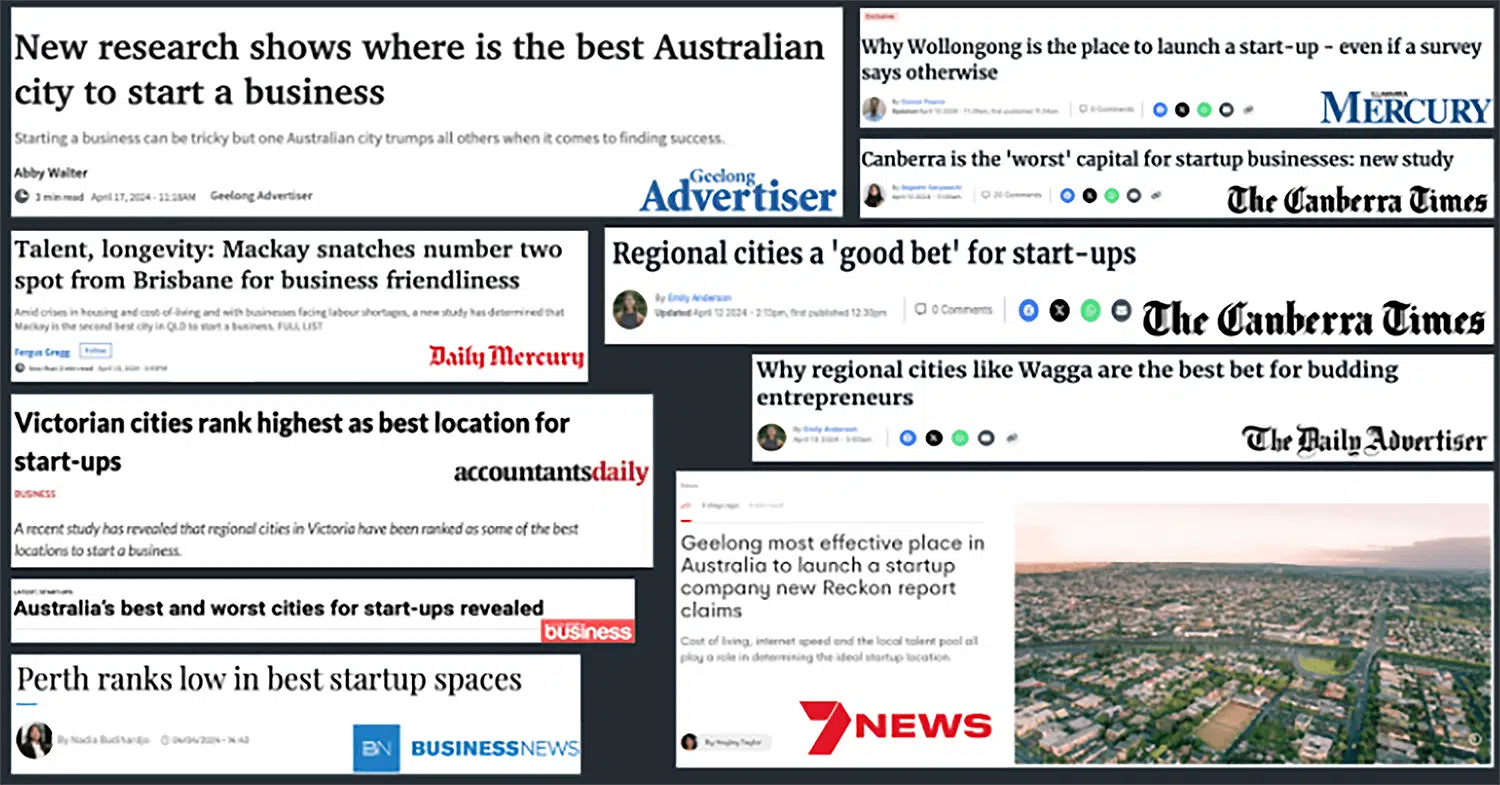
Results: The campaign earned 91 media features, 73 backlinks, and reached 55.8 million people. It was covered by outlets like the Canberra Times and 7 News. And it even got attention from Australia’s deputy prime minister.
Reckon’s CEO was also interviewed on ABC NSW Drive, increasing brand visibility.
Example 4: Self Financial’s “A Life of Tax” campaign by Root Digital
Shared by Darren Kingman, Founder of Root Digital.
Goal: Increase brand awareness for Self Financial with data-rich content creation that resonates with both the media and the public.
What they did: Root Digital conducted a study analyzing how much tax the average person is expected to pay over their lifetime in each US state.
The study used data from the American Community Survey and the Consumer Expenditure Survey. It factored in various taxes and life stages, like home ownership.

Results: The campaign received widespread media attention, earning 727 backlinks from outlets like The Washington Post, Yahoo, USA Today, and CNBC. The data was even shared with the governor of New Jersey, and the campaign won a US Search Award.
It earned 26,000 page visits, and the campaign boosted Self Financial’s national and local media visibility.
Surveys
Surveys gather unique data from your target audience, which you can use to create highly shareable and linkable content. Whether it’s industry insights or fun votes, surveys offer fresh perspectives.
Why it works: Surveys provide real-world data straight from the source. Depending on the topic, a survey can also spark an emotional reaction, increasing the chances of media coverage.
Benefits: This content is excellent for attracting backlinks when it offers original insights that can’t be found elsewhere. When the survey itself is highly shareable, it can provide a boost of direct traffic, engagement, and attention.
Example 5: “Sexiest Bald Man” campaign by Reboot
Shared by Helena Maniglia, Head of Digital PR at Reboot.
Goal: Create a fun campaign that sparks conversation, drives engagement, and boosts Reboot’s brand visibility.
What they did: Reboot surveyed bald celebrities based on unique criteria, like head shine and facial symmetry. The humorous nature of the campaign attracted the attention of major celebrities like Shaquille O’Neal and Dwayne Johnson, who interacted with the content on social media.

Results: The campaign generated 13,800 Twitter mentions, 348 TV and radio features, 620,000+ total engagements, and over 13,800 visits to the campaign page.
Example 6: Siege Media and Wynter’s content marketing trends report
Shared by Ross Hudgens, CEO, Siege Media.
Goal: Publish a report with first-party data that ties into their offering and can be repurposed in different ways, providing long-term SEO value.
What they did: Partnerships can bring your campaigns to the next level. Siege Media partnered with Wynter, a B2B market insights company, to create a detailed report analyzing trends in content marketing. They surveyed 293 content marketers about their plans for content strategy, AI, and budgets in 2024 to understand the future direction of content marketing.

Results: The content marketing trends report attracted links from 190+ domains.

But the original data also enhanced a post on content marketing statistics, which earned backlinks from 700+ domains.

This shows the power of creating one piece of great content and using it to improve other pieces of content in the process.
Besides boosting links and organic traffic, the campaign also helped position Siege Media as an authority in the content marketing industry.
Seasonal campaigns
Seasonal campaigns tap into the excitement and sentiment of specific holidays, seasons, or events. Since these campaigns are timely and relevant, they’re more likely to catch the attention of media outlets, resulting in increased brand awareness.
How it works: The idea is simple: create content related to a season, holiday, or event. The key is timing. Launch your campaign when interest and visibility are highest to maximize impact.
Benefits: By tying your campaign (or even your brand) to a particular event or time of year, you can boost relevance. You’ll gain visibility as people share relevant content during the lead-up to the event and throughout the season. If holiday-themed “soft news” stories pick up your campaign, you’ll gain additional brand awareness and potential backlinks.
Example 7: Coca-Cola’s “The World Needs More Santas” campaign
Goal: Reinforce Coca-Cola’s brand identity during the holiday season.
What they did: Coca-Cola’s 2023 campaign, “The World Needs More Santas,” centered on spreading joy and kindness. The campaign content encouraged consumers to channel their inner Santa Claus.
The campaign nailed the perfect blend of tradition and online interaction to reach a broad audience. It engaged people through a number of different methods, including:
- Video content: A heartwarming TV ad and online film, showcasing people embodying Santa’s spirit by performing small acts of kindness
- Online quiz: A Santa archetype quiz, encouraging users to share their results on social media
- Interactive content: AI-powered personalized holiday cards, where participants could design custom holiday cards featuring branded visuals

Results: Variations of the ad are available on one of Coca-Cola’s YouTube channels, where one has been view more..


Comments
Post a Comment